The relationship between the Democratic People’s Republic of Korea (DPRK) and Zimbabwe is a lasting anomaly. It stands out in the global geopolitical landscape. This alliance was born from anti-colonial solidarity during the Cold War. It evolved into a deeply personal partnership. It became a pragmatic collaboration between two autocratic regimes. Their connection is defined by ideological affinity. It is marked by infamous military cooperation. The regimes share a common interest in evading Western-led international norms and sanctions. This report examines how the relationship evolved, beginning with Pyongyang’s support for Robert Mugabe’s liberation struggle. It highlights the alliance’s surprising resilience in the post-Mugabe era. The bond is not merely a Cold War relic. It is a partnership deeply institutionalized within Zimbabwe’s military apparatus.
Foundations of the Alliance: Cold War and Liberation
The North Korea-Zimbabwe relationship was forged in the geopolitical context of the Cold War and African decolonization. During this era, Pyongyang’s foreign policy was driven by its fierce competition with South Korea for international legitimacy. North Korea strategically positioned itself as a champion of the Third World. It offered significant military and civil aid to radical African states and anti-colonial movements. This support was both ideological and pragmatic. It was designed to secure political loyalties. Additionally, it aimed to advance its own national interests on the world stage.
This strategy led to its involvement in the Rhodesian Bush War. Pyongyang actively supported Robert Mugabe’s Zimbabwe African National Union (ZANU). It also supported its military wing, ZANLA. While the Soviet Union backed a rival faction, North Korea provided practical military training to ZANLA guerrillas. They trained them in hidden camps near Pyongyang. The training included the use of advanced weaponry and explosives. This early support created a deep political and emotional debt. When ZANU unexpectedly won the 1980 elections, North Korea was cemented as a key “war-time friend” of the new regime.
The core of the alliance was beyond strategic calculations. It was the powerful personal bond between Kim Il Sung and Robert Mugabe. It was also an ideological connection. As former guerrilla fighters turned autocratic leaders, they shared a common life experience that fostered mutual admiration and trust. Mugabe first visited Pyongyang in 1978 to seek military support. He deeply admired North Korea’s Juche ideology. He viewed it as a blueprint for post-colonial nations to achieve political and economic independence. This personal connection transformed a strategic alliance into a durable partnership.
After Zimbabwe’s independence in 1980, the alliance entered its most notorious phase. To strengthen his power against internal rivals, Mugabe leveraged his close ties with Pyongyang. In October 1980, he signed a military agreement with Kim Il Sung for an “exchange of soldiers.” This agreement laid the groundwork. North Korea was set to train a new elite brigade for the Zimbabwe National Army (ZNA). In August 1981, 106 North Korean military advisors arrived. They began training this unit. It became known as the Fifth Brigade.
The Fifth Brigade was explicitly designed for internal repression. The Brigade was comprised almost entirely of ethnically Shona former ZANLA fighters. It operated outside the normal military chain of command. The Brigade answered directly to Mugabe. It had its own codes, uniforms, and equipment, effectively making it a private army for the ruling ZANU-PF party.
From 1983 to 1987, the Fifth Brigade was deployed to the Matabeleland and Midlands provinces—strongholds of the rival ZAPU party—in an operation Mugabe named “Gukurahundi” (the early rain which washes away the chaff). Under the pretext of quelling a dissident movement, the brigade unleashed a systematic campaign of terror against civilians, resulting in an estimated 20,000 deaths.
The operation was marked by extreme brutality, including public executions, mass torture, and systematic rape. North Korea’s role was fundamental; its advisors provided the specific training, discipline, and tactical blueprint for this highly effective instrument of political repression.
Bronze, Bullets, and Hard Currency
After the Cold War, the relationship transformed from one of military and ideological patronage to a pragmatic economic partnership. The key actor in this phase was Mansudae Overseas Projects (MOP). MOP is the international commercial arm of North Korea’s state-run art studio. MOP became a vital tool for the Kim regime to earn desperately needed hard currency. They exported artists and laborers to build large-scale monuments in the distinct North Korean socialist-realist style.
The most prominent example in Zimbabwe is the National Heroes’ Acre in Harare. It is a 57-acre national monument and burial ground. Its construction began in 1981. The design was led by North Korean architects. It explicitly mimics the Revolutionary Martyrs’ Cemetery in Pyongyang. This design serves as a powerful ideological instrument. It physically cements ZANU-PF’s liberation narrative into the national landscape.
This “monument diplomacy” extended to other projects. It included two large statues of Robert Mugabe commissioned for a total of $5 million. This provided a direct stream of foreign currency to the heavily sanctioned North Korean regime. These activities have drawn international scrutiny, with UN experts investigating Zimbabwe for potential sanctions violations.
An Enduring Partnership in the Modern Era
The alliance’s resilience is one of its most remarkable aspects. Both nations became increasingly isolated. North Korea faced isolation for its nuclear program. Zimbabwe was isolated due to human rights abuses. Their shared status as “pariah states” reinforced their bond. This created a sense of common cause in opposing a Western-dominated international order.
The 2017 ouster of Robert Mugabe and the rise of his longtime ally, Emmerson Mnangagwa, did not sever these ties. This continuity showed that the relationship was not merely personal to Mugabe. It was institutionalized within the ZANU-PF and military elite. Many in these groups, including Mnangagwa, have their own histories with North Korea dating back to the Gukurahundi era.
A clear signal of this continuity came in February 2018, just months after Mugabe’s removal. A high-level Zimbabwean military delegation made an official visit to Pyongyang. This raised concerns about violations of UN sanctions prohibiting military cooperation. The two nations continue to exchange formal diplomatic messages, reaffirming their wish to strengthen bilateral relations.
Conclusion
The North Korea-Zimbabwe relationship offers a compelling case study. This alliance has adapted through global geopolitical shifts. It has endured international isolation and leadership transitions. It changed from a partnership based on shared anti-imperialist ideology. The relationship is now a pragmatic alliance of survival. It is rooted in a common history and mutually reinforcing regime interests. There are deep institutional ties within Zimbabwe’s ruling party and military. These ties suggest resilience. Even though it is largely symbolic, this axis is to persist as a lasting legacy of its Cold War origins.
This text was compiled with the assistance of Deep Research Gemini.
Pekerjaan Tata Usaha dalam kerangka pemerintahan maupun pendidikan merupakan tulang punggung operasional yang menghidupkan mesin sebuah entitas hingga bahkan sebuah negara. Fungsi Tata Usaha bersifat universal namun diwarnai oleh nuansa filosofis, struktural, dan kultural yang khas. Tulisan ini dibantu oleh Deepseek karena sesungguhnya tidak ada lagi yang bisa menolong orang yang kadung masuk ke Tata Usaha.
Di China, posisi ini tertanam dalam tradisi birokrasi terpusat yang kuat, warisan dari sistem kekaisaran dan diperkuat oleh model Partai Komunis modern. Filosofi Konfusianisme mengenai harmoni sosial dan peran negara yang dominasi tetap berpengaruh, meski bercampur dengan tuntutan modernisasi. Beban kerja yang tinggi dan tekanan untuk mencapai target kinerja yang ketat menjadi tantangan kesehatan mental dan fisik yang signifikan bagi staf administrasi.
Di berbagai negara Eropa seperti Jerman atau negara Nordik, Tata Usaha di pemerintahan beroperasi dalam kerangka Rechtsstaat (Negara Hukum) dan Welfare State (Negara Kesejahteraan). Filosofi yang mendasarinya adalah pelayanan publik yang netral, efisien, dan menjunjung tinggi hukum serta hak warga negara. Sistem administrasi publik yang matang cenderung berbasis karier dengan pelatihan intensif seperti École nationale d’administration di Prancis. Sistem ini juga menekankan profesionalisme, transparansi, dan akuntabilitas. Aspek kesehatan diwujudkan melalui perlindungan kerja yang kuat, jam kerja yang lebih terkendali, dan sistem dukungan psikososial, mencerminkan nilai-nilai humanis Eropa.
Di Jepang, Tata Usaha merupakan bagian dari sistem birokrasi yang sangat berwibawa dan hierarkis (Kanryō), dipengaruhi oleh filosofi keselarasan kelompok (Wa) dan dedikasi total (Ganbaru). Budaya kerja yang intens dengan jam kerja panjang (Karōshi) menjadi isu kesehatan kritis yang terus ditangani melalui reformasi.
Di Australia, yang banyak dipengaruhi paradigma New Public Management (NPM), memandang peran Tata Usaha melalui lensa efisiensi layanan publik berbasis nilai publik sehingga responsivitas terhadap warga sebagai pelanggan dan manajemen kinerja menjadi fokus. Fleksibilitas kerja dan fokus pada keseimbangan kehidupan kerja (Work-Life Balance) menjadi elemen kesehatan yang lebih menonjol dibandingkan beberapa negara Asia, meski tekanan untuk berinovasi dan beradaptasi dengan perubahan kebijakan tetap ada.
Di luar pusat-pusat ekonomi utama, peran Tata Usaha menghadapi tantangan yang berbeda namun tetap vital. Di Kenya, upaya digitalisasi (e-Citizen) bertujuan meningkatkan efisiensi dan mengurangi korupsi dalam layanan administrasi publik, namun infrastruktur dan kapasitas SDM yang terbatas menjadi kendala besar. Filosofi pelayanan berjuang melawan warisan birokrasi kolonial yang kaku dan tuntutan demokrasi baru. Terdapat pula beban kerja tinggi dan sumber daya minim yang berdampak pada kesehatan dan motivasi staf.
Di Pantai Gading pasca konflik, tantangannya adalah membangun kapasitas administratif yang netral dan efektif setelah perpecahan. Kesehatan staf terkait erat dengan trauma masa lalu dan tekanan dalam lingkungan pascakonflik yang masih rapuh. Di Guatemala, TU berjuang melawan warisan korupsi sistemik dan lemahnya penegakan hukum. Posisi Tata Usaha sering kali terjebak dalam jaringan korupsi atau menghadapi intimidasi, menciptakan lingkungan kerja yang penuh stres dan ketidakamanan. Filosofi pelayanan publik yang ideal berbenturan dengan realitas patronase dan ketidakpercayaan masyarakat, di mana kesehatan mental staf menjadi korban dari sistem yang disfungsional.
Dari perspektif filsafat administrasi publik, peran Tata Usaha mengundang pertanyaan mendasar tentang hubungan antara negara dan warga. Apakah birokrasi adalah mesin netral yang menjalankan kebijakan (Weberian), ataukah agen yang membentuk nilai publik melalui interaksi sehari-hari (Postmodern/New Public Service)?
Elemen kesehatan tidak dapat dipisahkan dari diskusi ini; birokrasi yang manusiawi harus mengakui bahwa staf Tata Usaha yang kelelahan, stres, atau sakit tidak dapat memberikan pelayanan publik yang optimal.
Penataan ruang kerja, peralatan dan dukungan psikososial, pengelolaan beban kerja adalah investasi krusial dalam kapasitas negara, bukan sekadar tunjangan. Secara administratif, fungsi Tata Usaha adalah penjaga prosedur, pengelola sumber daya (manusia, keuangan, aset), dan penghubung informasi antar unit.
Efektivitasnya bergantung pada sistem yang jelas, transparan, akuntabel, dan didukung teknologi yang memadai. Namun, sistem terbaik pun akan gagal tanpa staf yang kompeten, beretika, dan didukung kesejahteraan yang memadai.
Under the warm Portuguese summer sky, just outside Porto, on June 22, 2025, Diogo Jota’s face radiated pure joy. It was practically visible. Rute Cardoso’s joy was also clear. Their happiness was tangible. Diogo and his childhood sweetheart Rute, were celebrating at a beautiful estate – a truly happy, well-deserved moment. They had met as teenagers. Their love story was a quiet constant. It predated the fame, the stadiums, and the roar of the crowd.
Now, after more than a decade together, they were finally married. Their three young children were witnesses: sons Dinis and Duarte, and an infant daughter born just the past November. The celebration marked the peak of a life well-lived. Just weeks prior, Jota stood on the hallowed Anfield turf as a Premier League champion. The medal glinted around his neck. He celebrated Liverpool’s monumental 2024-25 title win with his loved ones. Before that, in early June, he lifted the UEFA Nations League trophy with his homeland. It was his second time, as he was a crucial member of Portugal’s remarkable generation. At 28, he had achieved every aspiration he had ever held and striven for.
Then, in the predawn stillness of Thursday, July 3, 2025, the world awoke to an incomprehensible silence. The news spread with the cold, brutal speed of modern tragedy: Diogo Jota was gone. He had been killed in a car accident. Tragically, he died alongside his younger brother, André Silva (26). Silva was also a professional footballer for the Portuguese club Penafiel.
The details, when they emerged, were stark and devastating. The brothers were traveling in a Lamborghini on the A-52 highway near Zamora in northwestern Spain. Shortly after midnight, the vehicle veered off the road. It then burst into flames. There were no other cars involved. Spanish police initially investigated the incident. They identified a catastrophic tyre failure during an overtaking maneuver as the cause. The fire was so intense that by the time emergency services arrived, the vehicle was unrecognizable.
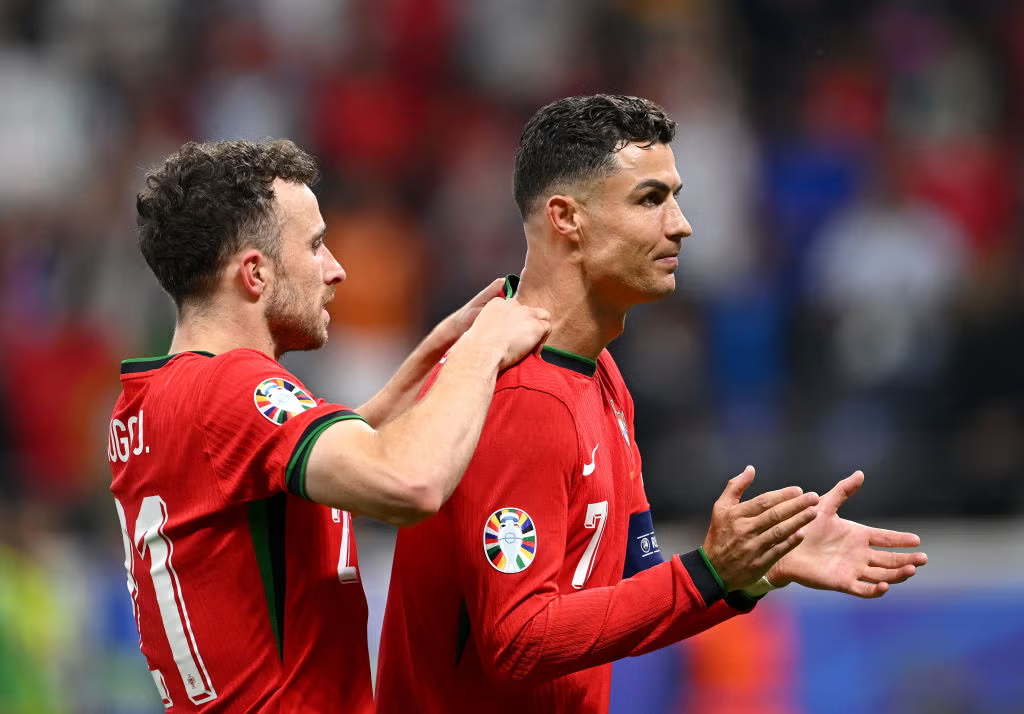
The shock wave was immediate and profound. It was a loss so sudden, so contrary to the joyful narrative of the earlier weeks, that it felt surreal. The football world, so often a theater of tribal rivalries, united in a single, heartbroken voice. Cristiano Ronaldo, his international captain and teammate, captured the collective bewilderment. “It doesn’t make sense,” he wrote. “Just now we were together in the National Team, just now you had gotten married”.
Jürgen Klopp, the manager who brought him to Liverpool. He molded him into a world-class striker. Klopp remembered him as an “exceptional player, exceptional boy.” He described him as a “perfect signing”. Liverpool’s new manager, Arne Slot, spoke not as a coach. He spoke as a fellow human being. He said his first thoughts were those of a “father, a son, a brother.” He felt deep empathy for a family experiencing an “unimaginable loss”. A life reached its absolute peak with a new marriage, a league title, and a young family. Its violent, instantaneous end transformed a sports story. It became a human tragedy of almost unbearable poignancy. It was not just the loss of a great footballer. It was the loss of a future filled with promise. A story that would now stay forever unfinished.
To understand the player Diogo Jota became—the relentless “pressing monster,” the “mentality monster”—one must first understand the boy he was. His story did not begin in the polished, prestigious academies of Portugal’s footballing elite. It began on the modest streets of Gondomar, which is a municipality near Porto. From the age of nine until he was 17, he played for the small local club, Gondomar SC. This was not a pathway to stardom. It was a childhood passion. His family’s commitment sustained it. They paid a fee of €20 a month just so he could train.
Throughout his youth, Jota was consistently overlooked. He had trials at the giants, Benfica and Porto. However, he was always rejected. He was deemed too small and physically underdeveloped to compete at the highest level. He would later recall, “I was one of the better ones.” However, he was never the best. This statement dripped with the humility that would define his character. This repeated rejection became the crucible in which his greatest strengths were forged.
He did not have the physical advantages of his peers. Therefore, he developed other, more subtle weapons. These included a superior footballing intelligence, a ferocious work rate, and an unshakable determination. His playing style was a direct consequence of these early struggles. It was a survival mechanism. Later, it would be mistaken for mere talent. The player who would one day terrorize Premier League defenses was not born, but made, in the shadow of rejection.
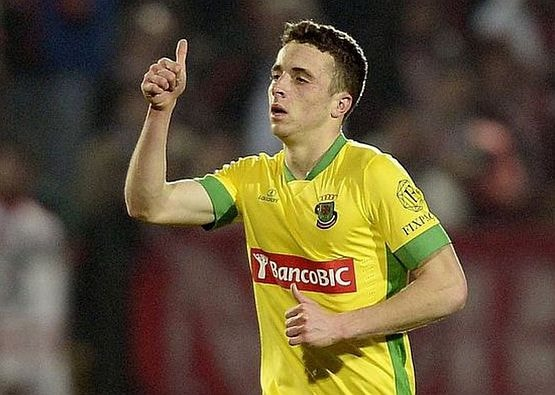
His first significant step came in 2013 when he signed for the youth setup of Paços de Ferreira. Yet even this breakthrough was fraught with peril. During his medical, a heart condition was detected. This diagnosis temporarily halted his training. It threatened to end his career before it had even begun. Displaying the quiet fortitude that would become his trademark, he waited for further tests, which eventually cleared him to play.
Once on the pitch, his ascent was rapid. He was promoted to the senior squad. He made his debut at 17. Soon, he announced himself to the wider Portuguese footballing world. On May 17, 2015, he scored a brace against Académica de Coimbra. He became the youngest player in Paços de Ferreira’s history to score in the top flight. His performances showcased a blend of sharp movement. This clinical finishing attracted the attention of Spanish powerhouse Atlético Madrid. They signed the 19-year-old in 2016. The boy from Gondomar, who once had to pay to play, had arrived on the European stage.
The Molineux Miracle: From the Second Tier to European Nights
Jota’s move to Atlético Madrid seemed like the dream’s next step. However, his time in the Spanish capital became a curious interlude. It was a defining moment in his career. Despite a transfer fee of around €7 million, he never played a single competitive match for Diego Simeone’s side. Instead of being a setback, this period proved to be a catalyst.
He was immediately loaned back to his home country to play for FC Porto for the 2016-17 season. There, he worked under a manager pivotal to his career: Nuno Espírito Santo. At Porto, he showcased his growing maturity. He scored nine goals, including his first in the UEFA Champions League. He established himself as a versatile and intelligent forward.
What happened next was a move that baffled many but revealed the depth of Jota’s character and strategic thinking. In the summer of 2017, he chose to swap Champions League football for the English second tier. He joined Wolverhampton Wanderers on loan to reunite with Nuno. This decision showed his priority for a trusted manager and a specific project.
He valued these over the superficial prestige of a bigger club. This demonstrated a rare maturity. As Wolves’ chairman Jeff Shi would later remark, Jota possessed the clarity and decisiveness of a future CEO. It was a calculated risk, a step back that would propel him two giant leaps forward.
His impact at Molineux was nothing short of transformational. In a league known for its brutal physicality, the “small” forward from Portugal thrived. He became the focal point of Nuno’s attack, his intelligence and clinical finishing cutting through Championship defenses. He concluded the 2017-18 season as the club’s top scorer. He achieved a career-best 17 league goals. This performance fired Wolves to the title and a long-awaited return to the Premier League. He was not just a loan player. He was a “modern hero of Molineux.” Fans adored him for his on-pitch warrior spirit. They loved his humble, down-to-earth personality.
The transition to the Premier League was seamless. Jota was instrumental in Wolves achieving consecutive seventh-place finishes, a remarkable feat for a newly promoted side. It was on the European stage, however, that he truly announced his arrival as a world-class talent.
During the 2019-20 Europa League campaign, he delivered a series of stunning performances. Most notably, he scored back-to-back hat-tricks against Beşiktaş and Espanyol. This was a first in the club’s history. His 13-minute treble against the Turkish side was the fastest European hat-trick ever for Wolves. It is a record that may never be broken. This incredible run of form earned him his first senior cap for Portugal in November 2019. It cemented his journey from an unknown loanee in the Championship to one of the most coveted forwards in Europe.
Anfield’s “Mentality Monster”: Conquering the Kop
In September 2020, Liverpool made their move. They signed Jota for a fee reported to be between £41 million and £45 million. At the time, some viewed him as an expensive backup. He was considered for the club’s legendary front three of Mohamed Salah, Sadio Mané, and Roberto Firmino. It took him almost no time to shatter that perception. Jürgen Klopp, who later admitted Jota was even better than he had expected, was thrilled by his potential.
The Portuguese forward scored just eight minutes into his Premier League debut for the Reds. He went on to score seven goals in his first ten appearances. This feat had not been managed by any Liverpool player since Robbie Fowler. The Kop had a new hero. There was a new chant for him. It went:
“He’s a lad from Portugal. Better than Figo. Oh, his name is Diogo!”
Jota was, in many ways, the definitive Klopp player, a perfect fusion of technical quality and relentless intensity. His playing style was a complex tapestry of elite attributes. He mastered movement. He “ghosted into space” that others couldn’t see. As a classic poacher, he frequently made late runs into the box. His exceptional two-footed finishing made him incredibly difficult for defenders to anticipate. Of his 63 Premier League goals, 31 came from his stronger right foot. A remarkable 22 were scored with his left. Added to this was an extraordinary aerial ability.
Standing at just 5’9″, he was not physically imposing. However, he scored 10 headed goals in the league. This was a testament to his phenomenal leap and impeccable timing. But what truly endeared him to Klopp and his staff was his work rate. He was, as assistant manager Pep Lijnders famously described him, a “pressing monster.” He led the defensive effort from the front with a tenacity that embodied the team’s philosophy.
This unique skill set translated directly into silverware. Jota was essential to Liverpool’s domestic cup wins. He helped win the FA Cup in 2022. He also contributed to the Carabao Cup victories in 2022 and 2024. His performance in the 2022 Carabao Cup semi-final against Arsenal was remarkable. He scored both goals in a 2-0 victory. It was a clear display of his ability to deliver in high-stakes moments. The crowning glory of his club career came in May 2025. That was when he finally got his hands on the Premier League trophy.
Fittingly, his last ever goal for Liverpool was a decisive, trademark strike. It was a poacher’s finish to win the Merseyside derby against Everton. This goal proved crucial in the title race.
His time at Anfield was, however, a constant battle with his own body. He missed a total of 99 games for club and country during his Liverpool tenure. This was due to a litany of muscular problems, knee injuries, and calf issues. This persistent struggle with injuries makes his final tally of 65 goals in 182 appearances remarkable. It is a testament to his ruthless efficiency when fit. He was a player who, despite the physical setbacks, always found a way to make a decisive impact.
A Nation’s Pride: The Red and Green of Portugal
For his country, Diogo Jota was a vital component of one of its most talented generations. He finished his international career with 49 caps and 14 goals. He established himself as a trusted and versatile attacking option alongside the legendary Cristiano Ronaldo. Although he was not always the headline star, his intelligent movement offered a different kind of threat. His clinical finishing acted as a tactical key capable of unlocking the most stubborn defenses.
His international career was decorated with significant success. He was part of the squad that won the inaugural UEFA Nations League in 2019. At that time, he was still a Wolves player. He played a crucial role in Portugal repeating the feat in June 2025. This victory would tragically become his final act in a Portugal shirt. He represented his nation at two European Championships, in 2020 and 2024. At the delayed Euro 2020, he was a regular starter. By Euro 2024, with a boom in Portuguese attacking talent, he had transitioned into a valuable impact substitute. He performed this role with his typical professionalism.
However, Jota’s international story, much like his club career, was also marked by heartbreaking misfortune. He sustained a severe calf injury in October 2022. This injury cruelly robbed him of the chance to play in the 2022 World Cup in Qatar. This was not just a personal blow; it was a significant tactical loss for the national team.
In their quarter-final exit, Portugal lost 1-0 to a deeply organized Morocco side. They desperately missed a player with Jota’s unique ability to find space in crowded penalty areas. He also convert half-chances. His absence was keenly felt. It was a poignant “what if” in Portugal’s campaign. This underscored that his value to the team went far beyond his statistics. He was a problem-solver, and in their moment of greatest need, he was the solution they did not have.
Beyond the Pitch: The Gamer, The Husband, The Father
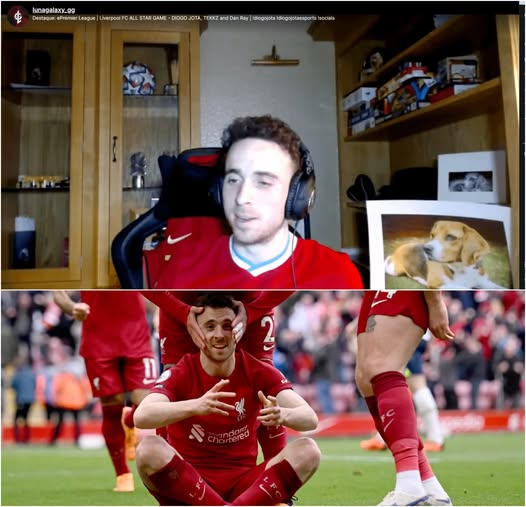
Away from the floodlights and the manicured pitches, Diogo Jota lived a life defined by quiet passion and deep devotion. To many, he was known almost as much for his exploits in the virtual world as in the real one. He was an avid and exceptionally skilled gamer, particularly with the EA Sports FIFA franchise. This was no casual hobby. He was a world-class competitor. During an injury layoff in 2021, he achieved the rank of No. 1 in the world in the highly competitive FUT Champions mode.
His passion extended into an entrepreneurial venture with the creation of his own e-sports organization, Luna Galaxy. This excellence in gaming was not a separate interest but a parallel expression of his footballing mind. The rapid cognitive processing, spatial awareness, and clutch decision-making are needed to compete at the highest level of e-sports. These attributes are the very same ones that made him such an intelligent and deadly attacker.
The true center of his world, nevertheless, was his family. His relationship with Rute Cardoso was the anchor of his life. Their love story began in a classroom in Porto. They were just teenagers then. This happened long before he was a household name. She was his constant. She provided unwavering support and followed his career from Paços de Ferreira to Wolverhampton and finally to Liverpool. In each new city, she created a home for their growing family.
As mentioned before, he was a doting father to their three children. Social media posts showed a man who cherished his domestic life. He was a global superstar grounded by the simple joys of fatherhood.
It is this profound personal happiness that makes the timing of the tragedy so utterly cruel. The wedding on June 22 was the culmination of a 13-year partnership. In the aftermath of his death, their final social media posts became heartbreaking digital artifacts. A video Rute posted of their wedding day was captioned, “Sim, para sempre” – “Yes, forever”.
Jota’s own final Instagram post was a highlights reel from the wedding, captioned simply, “A day we will never forget”. In the hours and days that followed the crash, the world tried to process the news. During this time, Rute’s post was viewed over 40 million times. This was a testament to the immense public outpouring of empathy for a love story so brutally interrupted. A future that had just been formally consecrated was, in an instant, stolen forever.
A Legacy Etched in Red
In the wake of the tragedy, the tributes poured in from every corner of the globe. They spoke not only of a great player. They also spoke of a deeply loved and respected man. Current and former teammates shared messages of profound grief. These messages came from Liverpool’s Darwin Nunez and Harvey Elliott to Portugal’s Bruno Fernandes and Wolves’ Rúben Neves. Club legends like Sir Kenny Dalglish and rival clubs expressed their shock and sorrow. Even global figures from outside football, like NBA star and Liverpool part-owner LeBron James, were shocked and saddened. This response measured the universal esteem in which he was held.
Diogo Jota’s legacy is not solely measured by his impressive collection of medals. It is not solely measured by his statistics, impressive as they are. His true legacy is etched in the story of his journey. He was the quiet, underestimated boy from Gondomar. Through sheer force of will, intelligence, and an indomitable spirit, he conquered the most demanding league in the world. It lives on in the joy he brought to millions of fans. This joy is immortalized in the simple, heartfelt chant that echoed around Anfield. The song captured the essence of his improbable rise.
His life was an unfinished symphony, a composition of breathtaking crescendos tragically silenced before its final movement. One can only wonder about the future that was lost. There were trophies he might have lifted, goals he might have scored, and records he might have broken. But more poignantly, the world mourns the personal future that was stolen. The years of watching his children grow are gone. The lifetime he should have had with his wife was lost. The quiet moments of a life away from the game will never be.
The most fitting final image is not of a goal or a trophy. It is of him on the Anfield pitch after winning the league, his young children by his side. It is a picture of a man who had achieved all his professional dreams while holding onto what mattered most. Or maybe it is the final frame of his wedding video. He shares a kiss with his new bride under a shower of sparklers. It is a moment of pure, unadulterated hope. He leaves behind a legacy of brilliance and bravery, of humility and heart. Millions watched him play. Now, they mourn his passing. He will be remembered with a line from the anthem he loved. It is the song he asked to be played at his wedding.











 ariesadhar.com