Kajian CIPD tentang Insentif dan Pengakuan serta Ketidakcocokannya dengan Sektor Publik

Dalam dunia kerja modern, sebenarnya organisasi dituntut untuk tidak hanya memberikan gaji sebagai hak dasar. Organisasi juga harus merancang sistem penghargaan yang mampu mendorong motivasi. Sistem semacam ini juga perlu meningkatkan kinerja.

Kajian CIPD tahun 2022 tentang insentif dan pengakuan menunjukkan bahwa baik insentif finansial maupun bentuk pengakuan non-finansial memiliki peran penting dalam membangun keterlibatan, kepuasan, serta produktivitas karyawan. Namun demikian, efektivitas keduanya sangat bergantung pada desain, konteks, dan persepsi keadilan yang dirasakan oleh pekerja.

Artikel ini merangkum sepuluh pelajaran utama dari kajian tersebut dengan penjelasan mendalam di setiap poin untuk membantu praktisi SDM dan pimpinan organisasi merancang strategi penghargaan yang lebih tepat sasaran. Pada saat yang sama artikel ini juga akan membenturkannya dengan realita birokrasi yang agak nganu. Khususnya birokrasi di Kepulauan Natal Utara.

Insentif dan Pengakuan: Dua Sisi Penghargaan

Insentif biasanya bersifat finansial dan ditetapkan sebelum target dicapai, sedangkan pengakuan lebih bersifat non-finansial, retrospektif, dan seringkali tidak terduga. Keduanya memiliki tujuan sama: meningkatkan motivasi dan kinerja. Dalam praktik di sektor privat, batas antara insentif dan pengakuan sering kabur, karena organisasi dapat menggabungkan keduanya. Misalnya, pemberian bonus kecil yang disertai ucapan terima kasih publik.

Di sebuah negeri dekat Australia, insentif dan pengakuan ini semakin nisbi. Insentif secara umum tidak ada. Skema Pintar Goblok Penghasilan Sama (PGPS) masih langgeng. Selain memang susah karena di sektor publik, targetnya bukan terkait nilai uang. Ada sih institusi yang mengklaim diri sebagai penyumbang pendapatan namun perspektifnya tentu menjadi tidak bisa disetarakan dengan institusi lain yang tugasnya memang untuk menjalankan peran sebagai negara. Pengakuan memang ada, namun cenderung terbatas. Sekarang misalnya dikenal Sasaran Kinerja Pegawai (SKP) dengan predikat Sangat Baik, Baik, Butuh Perbaikan, Kurang, dan satu lagi. Nah Sangat Baik dan Baik ini secara nilai tunjangan kinerja sama persis sehingga memang wujudnya betul-betul pengakuan doang.

Intinya sih, baik insentif maupun pengakuan adalah instrumen penting dalam manajemen SDM modern.

Teori yang Menjelaskan Cara Kerja Insentif

Kajian CIPD menyoroti dua teori utama: reinforcement theory yang menekankan pengulangan perilaku positif bila konsekuensinya menguntungkan, serta self-determination theory yang membedakan motivasi eksternal dan intrinsik. Insentif jelas mendorong motivasi eksternal, namun tidak selalu merusak motivasi intrinsik. Selain itu, teori lain seperti goal-setting theory, expectancy theory, dan agency theory juga relevan untuk memahami bagaimana penghargaan memengaruhi perilaku kerja.

Dampak Positif Insentif Finansial

Bukti ilmiah menunjukkan insentif finansial secara konsisten meningkatkan motivasi dan kinerja. Meta-analisis bahkan menemukan bahwa insentif dapat menggandakan peningkatan performa dibandingkan tanpa insentif. Menjadi wajar ketika kinerja aparat di sektor publik begitu-begitu saja karena memang tidak ada insentifnya.

Hal ini menolak pandangan lama Herzberg bahwa gaji hanya faktor higienis. Kekhawatiran bahwa insentif mengurangi motivasi intrinsik juga tidak terbukti secara umum, kecuali bila dianggap tidak adil atau eksploitatif. Dengan kata lain, insentif finansial adalah alat yang efektif bila dirancang dengan tepat.

Ihwal perancangan yang tepat ini yang kemudian perlu penyesuaian karena selama ini tidak pernah dirancang dengan serius untuk lebih dari sekadar paparan presentasi.

Pengakuan Non-Finansial Sama Pentingnya

Pengakuan berupa ucapan terima kasih, pujian, atau pengumuman pencapaian terbukti meningkatkan motivasi intrinsik, kepuasan kerja, keterlibatan, bahkan retensi karyawan. Efeknya tidak hanya pada individu yang menerima, tetapi juga menular ke tim. Pengakuan menciptakan iklim positif yang memperkuat rasa kebersamaan dan komitmen. Oleh karena itu, organisasi tidak boleh mengabaikan bentuk penghargaan sederhana namun berdampak besar ini.

Hal ini semakin sulit di sektor publik yang mengambil arah agile dengan skema Ketua Tim Kerja. Agile yang dimaksud kemudian hanya menjadi Ah Gile.

Pentingnya Keterkaitan dengan Kinerja

Insentif dan pengakuan harus jelas dikaitkan dengan pencapaian standar kinerja. Jika penghargaan diberikan hanya karena menyelesaikan tugas rutin tanpa standar, justru dapat menurunkan performa. Itu tadi. Sangat Baik dan Baik diakui sama. Artinya, biasa-biasanya saja sudah termasuk Baik, terus buat apa kerja lebih?

Efektivitas meningkat bila karyawan percaya tujuan yang ditetapkan penting dan bermakna. Partisipasi karyawan dalam penetapan tujuan juga dapat meningkatkan motivasi, meski bukti campuran. Yang terpenting adalah buy-in dan komunikasi yang jelas mengenai arti penting tujuan bagi organisasi.

Jenis Tugas Menentukan Efektivitas

Insentif lebih efektif pada tugas kompleks dibandingkan tugas sederhana. Pada tugas yang tidak menarik, insentif sangat membantu meningkatkan motivasi. Namun pada tugas yang menarik, dampaknya lebih kecil dan kadang bisa menurunkan performa, meski bukti tidak konsisten. Artinya, organisasi sebaiknya memprioritaskan insentif pada pekerjaan yang kompleks atau kurang menarik, sementara pengakuan lebih tepat untuk pekerjaan yang kurang bermakna.

Di sektor publik, banyak upaya mengasihani orang-orang yang bekerja di sektor yang tidak kompleks untuk tetap memperoleh insentif. Karena keraguan itu pula, ihwal insentif jadi tidak maju-maju, mungkin.

Otonomi dan Makna Kerja Sebagai Faktor Kunci

Insentif dapat juga mengurangi otonomi dan melemahkan motivasi. Otonomi penting karena mendukung identitas profesional dan rasa kontrol. Selain itu, pengakuan lebih efektif pada pekerjaan yang kurang bermakna. Sementara insentif lebih efektif bila tujuan sesuai dengan nilai pribadi dari pegawai. Bagian ini yang perlu diskusi di sektor publik.

Organisasi juga perlu menyeimbangkan antara pemberian penghargaan dengan penciptaan pekerjaan yang bermakna dan memberi ruang bagi otonomi. Pernah lihat institusi publik yang dikit-dikit kasih penghargaan? Pada akhirnya penghargaan jadi kayak biasa saja.

Keadilan Sebagai Landasan Efektivitas

Persepsi keadilan sangat menentukan keberhasilan insentif dan pengakuan. Keadilan mencakup tiga dimensi: distributif, prosedural, dan interaksi. Insentif lebih efektif bila dianggap adil dalam distribusi maupun prosedur. Metode penilaian juga memengaruhi persepsi keadilan; skala dengan lebih banyak kategori dianggap lebih adil. Subjektivitas dalam penilaian perlu diimbangi agar tidak menimbulkan kesan bias. Intinya, tanpa keadilan, insentif dan pengakuan bisa berbalik arah menjadi demotivasi.

Alokasi: Tim vs Individu

Insentif berbasis tim terbukti lebih efektif daripada individu, terutama bila distribusi dalam tim dilakukan secara adil. Namun skema “winner takes all” berisiko menimbulkan persepsi tidak adil. Di sektor privat saja problem, apalagi di sektor publik.

Insentif tim lebih efektif pada tim kecil dan homogen, sementara pada tim besar efeknya melemah. Pengakuan individu dalam tim bisa memotivasi, tetapi juga menimbulkan iri hati bila tidak dikelola dengan baik. Oleh karena itu, organisasi perlu menyesuaikan skema alokasi dengan struktur tim dan budaya kerja.

Keterbatasan Penelitian dan Implikasi Praktis

Banyak studi dilakukan di “laboratorium”, sehingga konteks nyata mungkin berbeda. Belum jelas perbedaan dampak insentif konsolidasi (kenaikan gaji permanen) vs non-konsolidasi (bonus sekali bayar). kalau i CIPD. Kalau di sektor publik suatu negara, dua-duanya bahkan nggak ada.

Ukuran optimal insentif juga belum pasti. Namun secara keseluruhan, bukti menunjukkan insentif dan pengakuan adalah instrumen penting dalam motivasi kerja. Risiko seperti persepsi ketidakadilan atau dampak negatif pada motivasi intrinsik dapat diminimalkan dengan desain yang tepat. Prinsip utama: sesuaikan penghargaan dengan realitas pekerjaan, hubungkan dengan kinerja, dan pastikan keadilan

Kesimpulan

Kajian CIPD menegaskan bahwa insentif finansial dan pengakuan non-finansial sama-sama efektif meningkatkan motivasi dan kinerja. Keduanya harus dirancang dengan mempertimbangkan jenis tugas, otonomi, makna kerja, serta persepsi keadilan. Organisasi sebaiknya mengintegrasikan insentif dan pengakuan dalam sistem manajemen kinerja, bukan melihatnya sebagai tambahan semata. Dengan desain yang tepat, insentif dan pengakuan dapat menjadi motor penggerak produktivitas, keterlibatan, dan kepuasan kerja jangka panjang.

Bingung? Pastinya. Karena tulisan ini dibantu oleh Copilot~

Post Pertama

Saya Kristo, saya kelas tiga SD. Umur saya delapan tahun. Saya memasuki TK pada Umur 4,5 tahun. Saya lahir bulan Juni tanggal 12 hari Senin tahun 2017. Saya kelas satu umur enam tahun, kelas dua umur tujuh tahun, dan kelas tiga umur delapan tahun.  Kini, saya mengalami kesulitan di kelas tiga ini. Karena saya mempunyai pelajaran baru yaitu IPA dan IPS dijadikan IPAS. Dan dari kelas satu sampai sekarang ada namanya semester. Ada semester 1 dan semester 2.

Hobi saya adalah bikin pesawat seperti jet, pesawat lebar, dan pesawat yang bisa menempuh jarak 169 feet. Channel tutorialnya adalah Foldable flight dan di sana ada lomba. Anda bisa ke  foldableflight.com/contest tetapi pesawat anda harus bagus. Sebenarnya saya punya channel sendiri yaitu Belajar Bersama Isto di YouTube, tolong subscribe di situ ya! Dulu saya suka menggambar apapun seperti mobil, pesawat, dino, dll.


Top 10 Unique Hotels for Your 2026 Travel Bucket List

Forget generic lobbies and uniform floor plans. If you’re looking for a stay as memorable as the city, you have some truly surreal options. They are available around the world. You can sleep inside an airplane in a tropical rain forest. Another choice is to drift into a deep slumber 16 feet beneath the Indian Ocean. These hotels defy conventional architecture and logic.

You are an adventure seeker. You’re a design enthusiast. Or maybe you’re just someone who wants a morning coffee with a giraffe. If so, this is for you. Here are the 10 most unique hotels around the world for your 2026 travel bucket list.

Giraffe Manor (Nairobi, Kenya)

This 1930th-style manor house is world-famous for its resident herd of Rothschild’s giraffes. The long-necked residents often poke their heads through the windows during breakfast. They also do this as you relax in your room, hoping for a treat. It’s a rare, intimate meeting that blends colonial charm with wild conservation.

Photo by Youngafrikanna . on Pexels.com

To make the most of your stay, book the Betty or Daisy rooms. These specific suites have balconies. You can feed the giraffes directly from your window. This can all happen before you even head down to breakfast. It’s perhaps the only place on Earth where a giraffe is your morning alarm clock.

The Muraka at Conrad Maldives (Rangali Island, Maldives)

The Muraka is a two-level residence with a master bedroom submerged 16 feet below the Indian Ocean. You can fall asleep watching sharks and stingrays glide over your 180-degree acrylic dome ceiling.

Credit: Hilton

Beyond the view, the suite comes with a 24/7 dedicated butler and private chef. If the “underwater fantasia” feels too secluded, you can head to the upper deck to enjoy your private infinity pool. Alternatively, book a table at Ithaa, the resort’s underwater restaurant. Ithaa is consistently ranked as one of the most beautiful in the world.

Treehotel (Harads, Sweden)

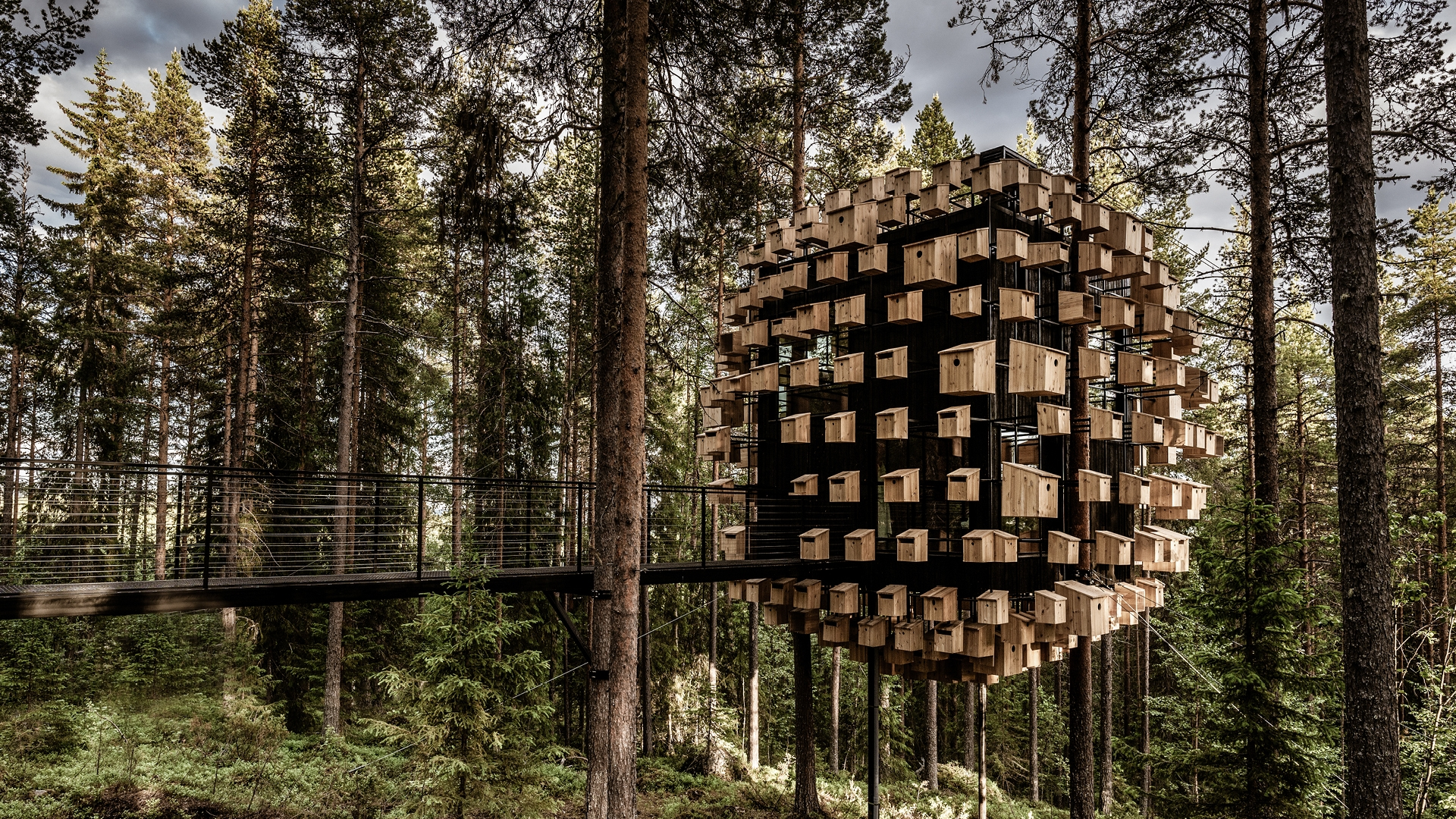
Located in a pine forest in Swedish Lapland, this hotel features high-concept “treerooms” designed by leading Scandinavian architects. Choose between a Mirrorcube that reflects the forest, a giant Bird’s Nest, or even a 1950s-style UFO.

Credit: Swedish Lapland

Check out the newest addition, The Biosphere, designed by BIG (Bjarke Ingels Group). The room is wrapped in 350 bird nests. It creates a symbiotic habitat. Guests can live in the heart of a bird sanctuary while enjoying a sleek, modern interior.

Skylodge Adventure Suites (Sacred Valley, Peru)

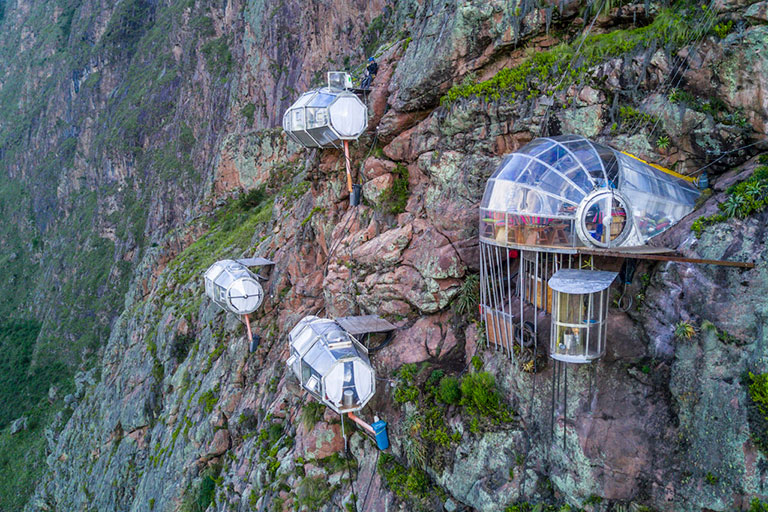
These transparent luxury capsules are bolted to a cliff side 400 meters above the Sacred Valley. To reach your bed, you need to hike a challenging trail. Alternatively, you can climb a vertical rock face via a via ferrata.

Credit: Natura Vive

The adventure doesn’t end with the climb. Your descent is via a zipline. It whisks you back down to the valley floor after sunrise. Dining here is equally extreme. Gourmet meals and wine are served on top of the capsules. You are securely harnessed to the structure.

Icehotel (Jukkasjärvi, Sweden)

The world’s original hotel made of ice and snow is rebuilt every winter. Each room is a unique art installation hand-carved by international artists using “snice” (snow and ice) from the Torne River.

Credit: Booking.com

For 2026, the Icehotel 36 rendition features a full-scale grand piano made entirely of ice. If you’re worried about the cold, you can opt for the year-round “Icehotel 365” section. It uses solar-powered cooling to keep the ice sculptures intact even during the summer.

Palacio de Sal (Uyuni, Bolivia)

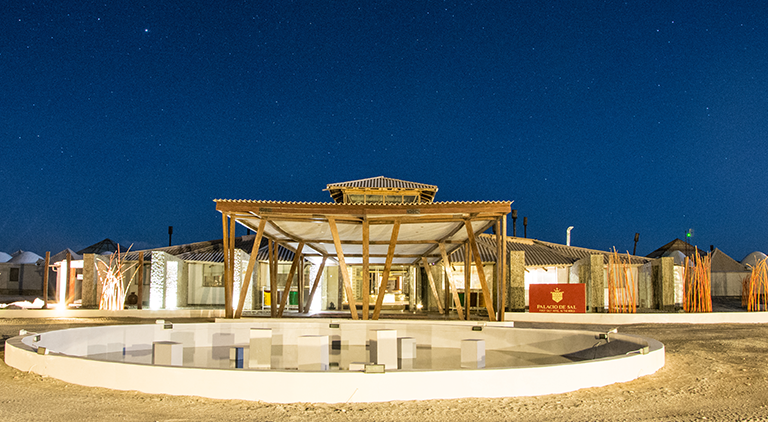
This hotel is located on the edge of the world’s largest salt flats. It is built almost entirely from one million blocks of salt. The construction includes the walls, floors, and much of the furniture.

Credit: Forbes

Visit the Andean Spa. It features a saltwater pool with a glass wall. This wall faces the vast, white expanse of the Salar de Uyuni. At night, the lack of light pollution turns the salt flats into a natural mirror for the stars. This effect makes the “Salt Palace” feel like a station on another planet.

Hotel Costa Verde (Manuel Antonio, Costa Rica)

This resort features a refurbished 1965 Boeing 727 airframe perched on a 50-foot pedestal in the jungle. The interior is paneled with local teak, and the wings serve as balconies.

Credit: Costa Rica Tourism

Staying here puts you at eye-level with the jungle canopy, meaning your neighbors are literally sloths, toucans, and monkeys. For dinner, head over to the on-site “El Avión” restaurant. It is a converted Fairchild C-123 cargo plane. This plane has its own fascinating history involving the Iran-Contra scandal.

Sextantio Le Grotte della Civita (Matera, Italy)

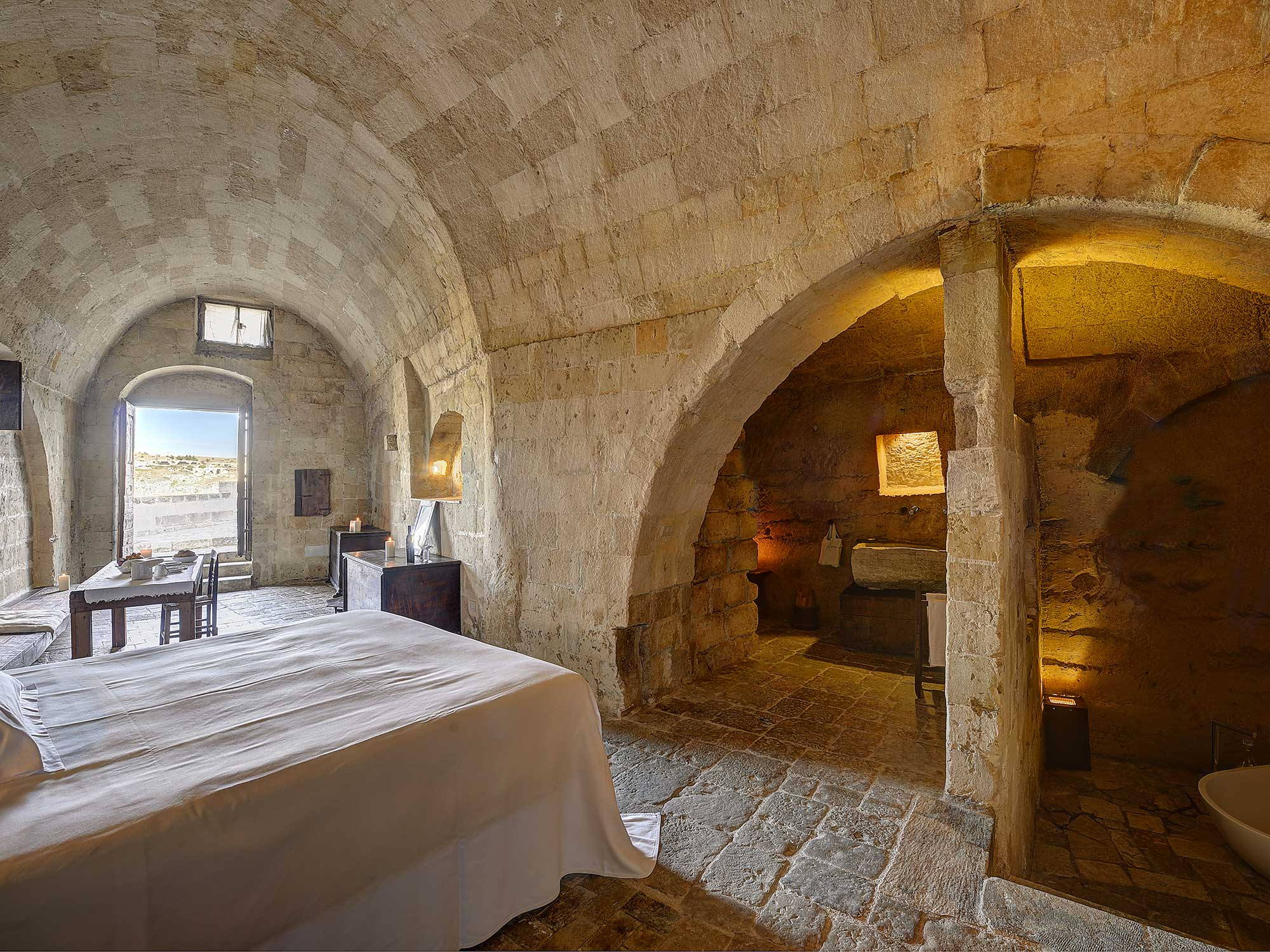
Stay in the ancient Sassi of Matera, a UNESCO World Heritage site. This hotel consists of restored cave dwellings that date back thousands of years, preserved with a radically minimalist design.

Credit: Sextantio

The hotel offers a “digital detox” atmosphere, using candles and soft floor lighting to highlight the ancient stone. For a truly spiritual start to your day, breakfast is provided in a 13th-century rock church. This church has been converted within the hotel complex and is called Cripta della Civita.

Kakslauttanen Arctic Resort (Saariselkä, Finland)

Famous for its Glass Igloos, this resort allows you to admire the Northern Lights from the comfort of your bed. The thermal glass prevents frosting, keeping the view crystal clear.

2026 is a “Solar Maximum” year. This means the Northern Lights will be more frequent. They will also be more vivid than they have been in over a decade. Book a stay during the spring or autumn equinox. This timing increases your chances of seeing the most intense aurora displays directly through your igloo roof.

Inntel Hotels Amsterdam Zaandam (Zaandam, Netherlands)

This hotel looks like a stack of nearly 70 traditional Dutch houses. The “Lego-like” facade represents four distinct styles of local architecture, ranging from notary houses to worker cottages.

Look for the “Blue House” section on the corner of the facade. It was inspired by a painting Claude Monet created. He painted it while visiting Zaandam in 1871. Inside, the rooms extend the theme even more. They display historical photos and local motifs. These elements tell the story of the Zaan region’s industrial heritage.

Choosing the right hotel isn’t just about finding a place to sleep. It’s about choosing the kind of story you want to tell when you get home. You might find yourself waking up to a giraffe at your window in Kenya. Alternatively, you could be watching the Northern Lights from a glass igloo in Finland. These stays offer a rare perspective on the world. This is something a standard hotel room simply can’t match.

In 2026, travel is increasingly about these “once-in-a-lifetime” moments. Some of these locations need a bit of an adventurous spirit. You might even need a harness. However, the memories—and the photos—are guaranteed to last far longer than your tan. So, as you plan your next escape, think about trying something unusual. Step into a cave, a tree house, or a salt palace.

Best Bali Neighborhoods for Quiet or Lively Monthly Villas

Choosing the right neighborhood is the fastest way to make a month in Bali feel like home. Below are five neighborhoods with clear notes on atmosphere transport and realistic monthly price ranges so you can match location to lifestyle.

Each entry explains who will enjoy the area what daily life looks like and what monthly villa costs tend to be in US dollars. Use these notes to narrow your search before viewing properties.

  • Canggu quiet streets sit beside lively café strips and surf beaches so it suits digital creatives who want a social scene and strong internet. Expect private one to three bedroom villas from USD 900 to 2 500 per month with many properties set up for remote work.
  • Seminyak central to dining boutiques and nightlife while still offering upscale villa options and easier airport access. Monthly villa rates commonly fall between USD 1 000 and 3 000 for modern two bedroom homes with private pools.
  • Ubud inland rice terraces and yoga studios create a calm routine ideal for families and wellness seekers who prefer green views and less traffic. Prices for comfortable two bedroom villas typically run from USD 800 to 1 800 per month.
  • Sanur known for a relaxed seaside promenade gentle waves and safer swimming it appeals to retirees and families looking for predictable days and easy local shopping. Monthly villas here are often USD 700 to 1 500 for well kept two bedroom options.
  • Jimbaran and Uluwatu coastal cliffs and quieter beach clubs draw those who prioritise ocean access and sunsets over nightlife and cafés. Expect villas from USD 900 to 2 200 per month depending on view and distance to main roads.

Before committing plan a short visit to feel each neighborhood at different times of day and to test commute times. For curated listings and assistance matching a villa to your routine monthly villa bali search can help streamline viewings and paperwork.

Best neighborhoods for quiet residential living and relaxation

If your priority is calm days and green views choose neighborhoods that trade nightlife for space and local rhythm. Quiet residential areas in Bali tend to offer gated villas or compound living with mature gardens reliable staff and predictable daily services. Below are realistic snapshots so you can compare atmosphere transport and typical monthly villa pricing.

Ubud sits inland among rice terraces and small villages. Areas like Sayan and Penestanan are best for a slow pace with regular yoga studios organic markets and easy access to clinics within 10 to 20 minutes. Private two bedroom villas with gardens and occasional staff usually run USD 800 to 1 800 per month depending on how close you are to the town center. Expect lower noise after 9 pm and dependable well water plus bottled deliveries.

Pererenan and Canggu outskirts offer a quieter alternative to the center of Canggu. You can find modern villas set back from main roads and quiet local warungs a short scooter ride away. Monthly rates for comfortable two bedroom homes start around USD 900 to 2 000 with faster internet in newer builds. Sanur and Nusa Dua are seaside options that favour calm promenades and family friendly beaches. Sanur typically has villas from USD 700 to 1 500 per month while Nusa Dua commands higher prices from USD 1 200 to 2 500 for resort style compounds. Jimbaran presents a quieter coastal village feel with villas from USD 900 to 2 200 and simple fishing village cafes nearby.

When choosing a neighborhood check commute times to your usual destinations and visit at different times of day to confirm noise levels. If you want tailored options and reliable viewings balivillahub.com can arrange neighborhood tours and shortlist villas that match your daily rhythm and budget.

Best neighborhoods for cafés nightlife creative scenes and coworking

If you want month long living with easy access to cafés coworking and evening social life choose neighborhoods where lifestyle and infrastructure align. Below are three clear choices with practical notes on atmosphere internet availability typical villa rates and what time of day each area feels most alive.

Canggu

Canggu blends surf beaches boutique cafés and a strong remote worker community. Expect clusters of lively streets around main roads and quieter lanes away from traffic where villas sit behind gardens. Monthly villa prices commonly fall between USD 900 and 2 500 for one to three bedroom properties with many modern builds offering fiber internet in the 30 to 150 megabit range.

Seminyak

Seminyak offers a polished café scene and evening venues that stay busy into the night. This is ideal if you want dining and nightlife within a short ride from home while still having upscale villas with private pools. Monthly rates here typically range from USD 1 000 to 3 000 for two bedroom villas close to the center and internet reliability is generally good in newer developments.

Ubud

Ubud suits creatives who prefer daytime café culture and art events over late night bars. Coworking options and quiet cafés with power outlets are concentrated near the town center while villas in nearby rice terrace areas provide space for focused work. Expect comfortable two bedroom villas from USD 800 to 1 800 per month and plan for slower evening commerce compared with coastal hubs.

Match your choice to the rhythm you want each day and test internet at potential villas before committing. For tailored searches viewings and neighborhood insights balivillahub.com can help shortlist properties that fit your work and social needs.

How to pick a neighborhood based on daily needs and routine

Choosing a neighborhood for a monthly villa starts with mapping a typical day and matching location to that routine. Make a short checklist of morning commute needs midday services and evening habits then weigh proximity to work hubs schools healthcare and grocery options. Below are practical considerations and concrete benchmarks to guide a confident selection.

Prioritize commute and access

Work and coworking

If you rely on coworking or client meetings aim for neighborhoods within a 10 to 30 minute scooter ride of the main hubs. Canggu to central Seminyak can be 20 to 40 minutes in peak traffic so test commutes at rush hour. For frequent airport travel pick areas within 20 to 35 minutes drive from Ngurah Rai.

Daily errands

Look for a local minimarket within five to ten minutes and a full supermarket within 15 to 25 minutes. If you plan regular medical visits confirm a clinic or pharmacy is under 20 minutes away.

Match amenities to daily habits

Internet and workspace

For remote work insist on fiber or documented 30 Mbps minimum speeds inside the villa. Verify backup power for predictable uptime and ask about dedicated work nooks or rooms when viewing properties.

Household services

Decide if you need daily housekeeping gardener or a chef and confirm those services are available locally. Some neighborhoods have pre vetted staff networks which saves time and repeated interviews.

Consider noise safety and local services

Visit afternoons and evenings to gauge noise from traffic or nightlife. Check for gated compounds night guards or CCTV if security is a priority. Also confirm parking and secure scooter storage if you bring or rent vehicles.

Balance practical needs with the atmosphere you want and schedule at least two site visits at different times of day. For tailored neighborhood comparisons viewings and vetted listings balivillahub.com can prepare a short list that matches your routine and budget.

Practical tips for visiting neighborhoods before booking a monthly villa

When you plan neighborhood visits focus on experiencing a typical day rather than just ticking boxes, and aim to visit at least twice at different hours so you can hear traffic in the morning and nightlife in the evening. Start by timing common journeys, ride the route you would take to work or school and note real commute times during peak traffic, then use a scooter or taxi to check accessibility to grocery stores clinics and the airport. Test the villa utilities directly, run a water tap to check pressure and hot water, switch on lights to observe electricity stability and request to run a speed test on the wifi to confirm the provider speed inside the house. Walk the block to assess noise levels and smells and speak with neighbors about their routines and any recurring issues. Inspect outdoor spaces for sun and shade, check pool cleanliness and drainage, and look for signs of pests or recent treatment history. Ask to meet the housekeeper or property manager to understand cleaning frequency available staff and response times for repairs. Confirm secure parking and whether gates guards or CCTV are present if safety matters to you. Take photos and short videos of any concerns so you can compare properties later and share them with representatives. Request recent rental references or reviews and verify the owner identity or agency credentials before any payment. Finally, clarify all extra costs such as typical monthly utilities waste removal and internet so there are no surprises, and use balivillahub.com to arrange guided neighborhood tours and trustworthy viewings if you prefer a curated short list and professional support.

Tentang Mereka yang Tidak Lagi Bersama

Usia Facebook saya pada Januari 2026 ini adalah 17 tahun. Sudah cukup matang sebagai sebuah akun media sosial. Paling berasa di Facebook itu adalah ketika setiap hari dia merilis unggahan kita bertahun-tahun silam. Konten-konten masa muda yang kalau direfleksikan sekarang adalah perihal:

“ngapain gue ngetik beginian dulu?”

Salah satu momen yang kerap muncul adalah dokumentasi kehadiran saya pada pernikahan teman-teman. Kalau diingat-ingat, dulu itu saya cukup ekstrim juga urusan kondangan ini. Paling ekstrim adalah ada waktu Ketika saya kondangan pagi di Bekasi, malamnya di Surabaya. Pada pernikahan pertama dari personil kumpulan saya waktu kuliah yang Bernama UKF Dolanz-Dolanz, saya terbang langsung dari Padang ke Jogja di 1 Januari 2012. Belum lagi kisah-kisah naik kereta untuk menghadiri pernikahan di Bandung, Jogja atau Ambarawa.

Memang ihwal pertemanan ini menjadi penting karena kemudian mayoritas teman yang saya hadiri pernikahannya itu lantas hadir waktu pernikahan saya di Bandung tahun 2016. Benar-benar datang dari Jakarta ke Bandung untuk kondangan saya. Keren, sih.

Sambil terus menggulirkan layar media sosial berselang-seling dengan warta perselingkuhan dan perceraian figur publik, saya lantas menyadari bahwa ternyata tidak semua pernikahan yang saya hadiri dalam 17 tahun tersebut masih berada di jalur yang sama.

Ada pernikahan yang melibatkan saya sebagai pendamping pengantin pria dan usianya tidak panjang karena teman saya tersebut meninggal dunia. Ada pula beberapa pernikahan yang saya hadiri dengan cukup upaya dan kini mereka sudah menjalani hidup masing-masing, baik dengan pasangan baru maupun tetap sendiri.

Photo by cottonbro studio on Pexels.com

Di usia pernikahan yang baru akan 10 tahun pada 2026 ini serta kondisi negara yang model begini, saya cukup bisa memahami bahwa hidup berumah tangga bukanlah perkara mudah. Kalau menurut AI Consensus, berakhirnya rumah tangga umumnya didorong oleh pertengkaran dan ketidakharmonisan yang terkait erat dengan tekanan ekonomi, disertai perselingkuhan, KDRT, campur tangan keluarga, dan konteks perubahan sosial.

Saya tentu tidak punya nasehat pernikahan, sebab kalau saya jago maka saya akan daftar Seksi Kerasulan Keluarga di paroki dan jadi pembicara di giat Membangun Rumah Tangga. Saya sendiri bersama istri masih terus belajar membangun rumah tangga yang baik.

Saya juga tidak akan memberikan opini apapun pada teman-teman yang memilih untuk pisah jalan karena saya tidak tahu masalahnya. Satu hal yang saya pahami adalah bahwa setiap orang berusaha mencari solusi atas permasalahannya masing-masing dan boleh jadi perpisahan itu adalah solusi.

Semoga teman-teman semua sehat dan bahagia selalu, yha~